
Disaster Services - AmeriCorps
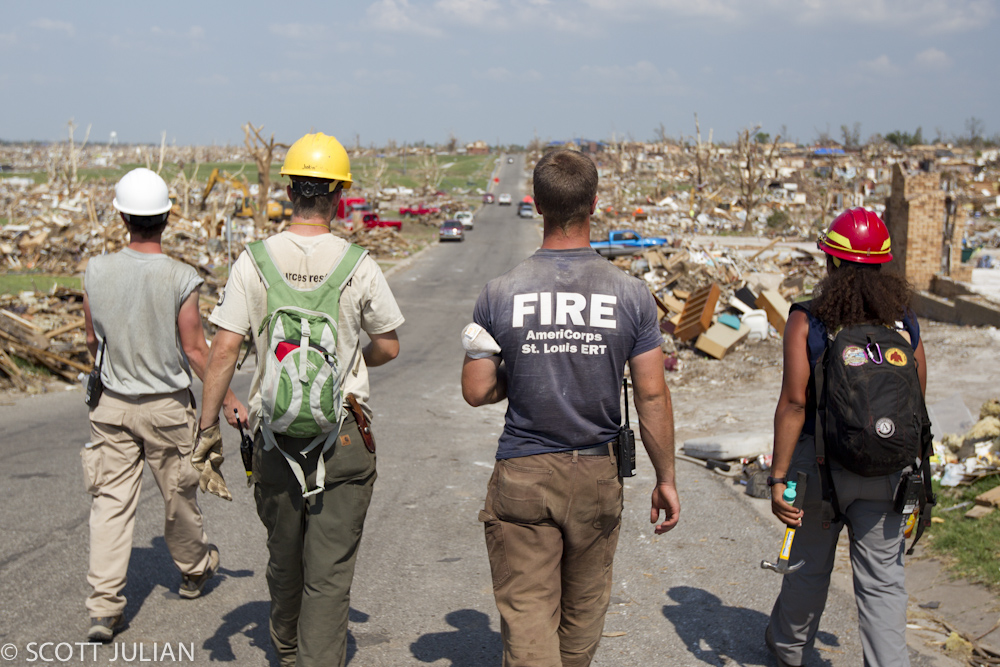
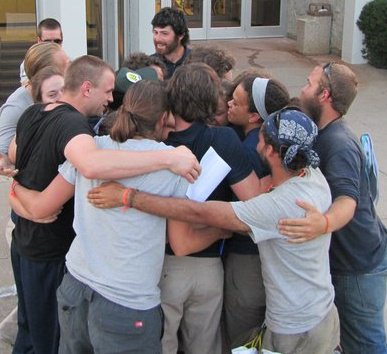
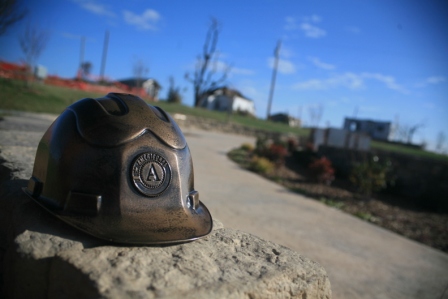
A lifetime in service lends to Bruce Bailey’s charismatic ability to inspire people to not pass the buck. “See the need—meet the need!” Over the past 18 years, nearly 900 young people have served under his tutelage and mentorship, responding to over 30 states and more than 60 counties in his home state of Missouri.
So it began on April 19th, 1995, when the Muriah Federal Building was bombed, and AmeriCorps St. Louis catapulted into action, leading what the Director of FEMA testified to Congress as ‘the best donations management in FEMA’s history’. And the spark was lit!
Hurricane Katrina, Hurricane Ike, Missouri ice-storms, the Greensburg, Kansas, and Mena Arkansas, Tornados, and the list goes on—these young people were trained problem-solvers, and they became invaluable wherever they served. Beyond their technical skills and the labor they supplied, AmeriCorps St. Louis brought hope in desperate times.
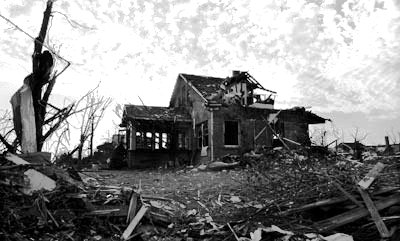
Fast forward to the spring of 2011. The number of tornadoes was unprecedented, from Virginia to Alabama. On May 22, an EF-5 tornado tore through Joplin, MO, killing 161 people, destroying over 7,400 single family homes, 500 businesses, 18,000 vehicles, one major hospital, two fire stations, four schools and leaving behind over 3,000,000 cubic yards of debris. 47% of affected homes were uninsured or seriously under insured and more than 34% of affected households were low income.
Once again, the spirited AmeriCorps St. Louis Emergency Responders who function as a trained, well-equipped team quickly deployed. In fact, the team is so well-respected in Missouri that they function within the State Emergency Operations Plan as the primary lead and force multiplier to manage unaffiliated volunteers and donations. Unaffiliated volunteers, also known as spontaneous volunteers, are individuals who offer to help or self-deploy to assist in emergency situations. Volunteers are necessary to efficiently assist those impacted by disasters, but their proven value is only maximized when they are fully integrated within the emergency management framework. Very often, their efforts to help those in need are underutilized or even problematic.
Organizing, coordinating, and supporting these volunteers presents many challenges. The need to multi-task was immediate. 400 spontaneous volunteers had responded by dawn on May23rd, and by 11 a.m. the number had grown to 1500. The team began to manage what became thousands of volunteers simultaneously with a catastrophic event. The team proceeded to develop a model tracking system that captured the details of service in ways that yielded unprecedented value to the disaster affected community. In less than a year, the economic impact of over 500,000 volunteers along with donations and equipment translated into over 17 million dollars to meet the required FEMA match for the entire response and recovery. Note: this is more than 38 times the investment of CNCS in the Safety Service Corps for the same period.
Since the night of May 22nd, 2011, news of their impact spread nationwide. The emergency response community has rallied to capture the best practice learned and is now focused on replicating the heralded success.
2 comments
Tim Weiss • about 14 years ago
Go AmeriCorps! Keep up the great work.
Don Barber • about 14 years ago
I spent several weeks in joplin as a volunteer working with Americorps. I will never forget a lot of them, Mike W.,Audrey, Will M.,Eric,Chad,Ali,Will B., Chris M.,Matt,Cassi, Josh, and many more. They all knew me as stitches as i was cut badly one day and chose to sew myself up rather than tie up a much needed nurse or doctor. These people gave everything and then some. Ones physical and emotional strength was tested beyond belief and they more than proved their abilities. I forever tip my hat to those I served with from St. Louis and abroad. Much love and respect to you all ! "Stitches"